NANOSNET

 View Only
  • 1.  44yo with recurrent retinal infarctions x3

    Posted 08-03-2025 18:17
    Hi everyone,

    Was wondering if anyone has any ideas on this case. 

    44yo woman with bilateral recurrent branch retinal arteriolar occlusions associated with headache/migraine. ? Ocular Susacs. ? Recurrent retinal migraine with infarction ?cerebroretinal angiopathy. ?TREX1

    Background: migraines started in 30s post delivery of second child. 3-4 migraines per year and had vertigo associated with it.

    Ocular nil

    Fhx:  Father:  Bowel cancer. Heavy alcohol use. Peripheral vascular disease with lower limb stents. Mother: healthy. 1 brother and 2 sisters – well. Maternal grandmother – dementia in late 80s. Maternal grandfather had ? MS. Wheel chair. Dx in 20-30s.

    Medications: aspirin 100mg daily, endep 20mg nocte

    Social: School teacher. Non smoker, nil alcohol. G5 P3 – miscarriage under 9 weeks.


    Sep2024  inferonasal blur in right eye then headache following. HVF – inferonasal defect and superonasal defect (patient unaware of) od and normal os. CRP <1 ESR 6

    Right superotemporal branch retinal arteriolar occlusion. Started on aspirin 100mg daily and endep.  10mg nocte. ECG sinus. Transthoracic echo normal.

    24Jul2025 Carotid US -normal

    CT brain and COW 23Jul2025: normal

    CT C A Pelvis – normal

    MRI brain: mild chronic ischaemic changes.
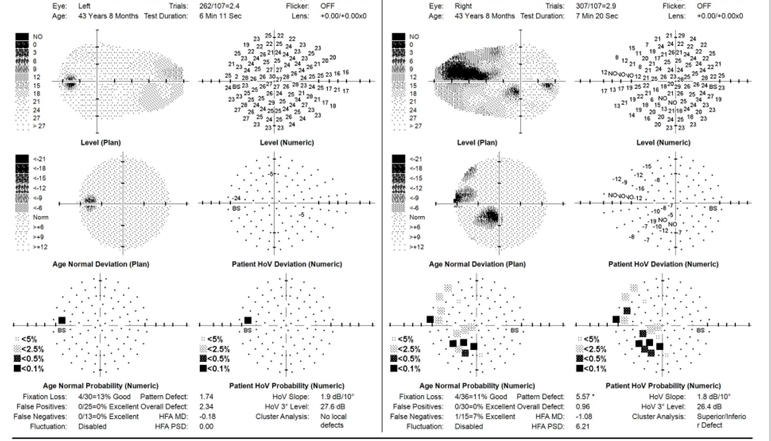
    image.png

    image.pngimage.png

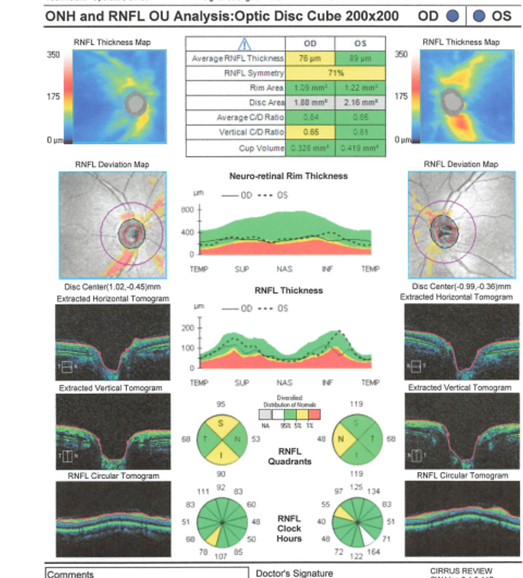
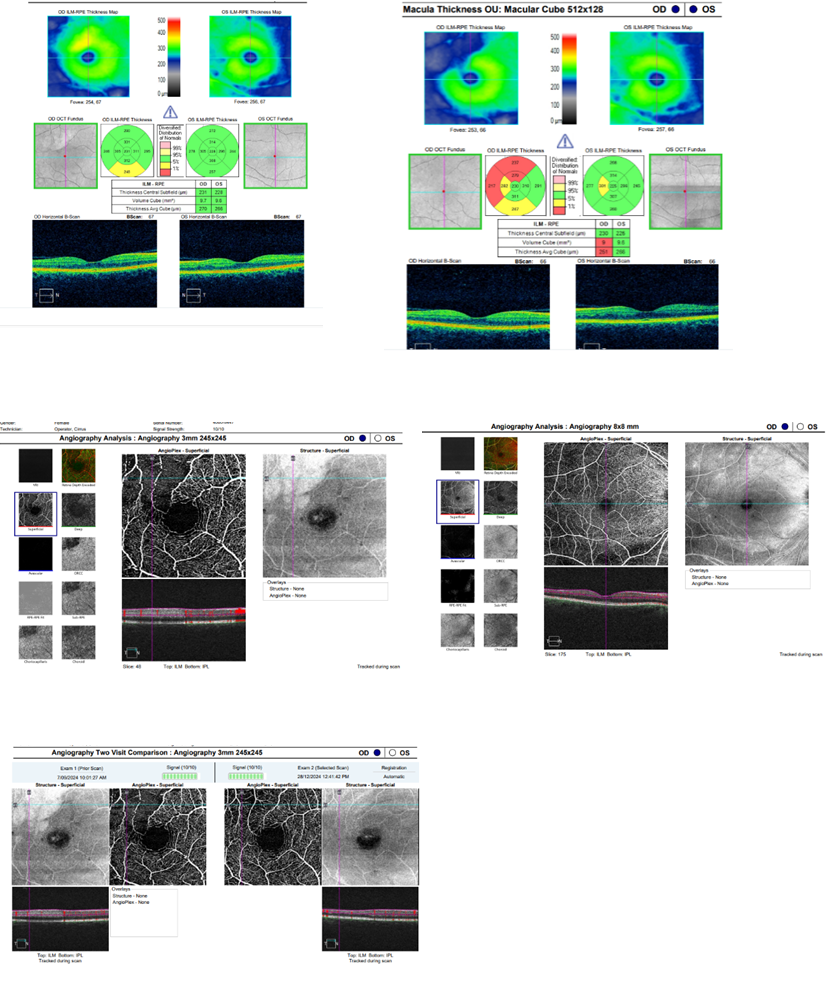
    With evidence of old occlusive disease in both eyes as evidenced by inner retinal loss on OCT.  The right eye occlusions were larger and had associated field loss.


    June2025 headache and seeing floater right eye

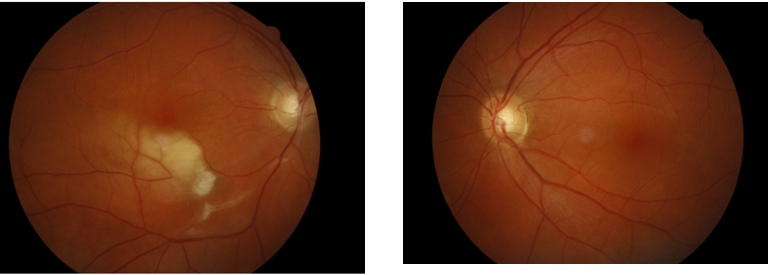
    Cotton wool spot inferior to optic disc od. associated with Headache. Endep increased to 20mg nocte
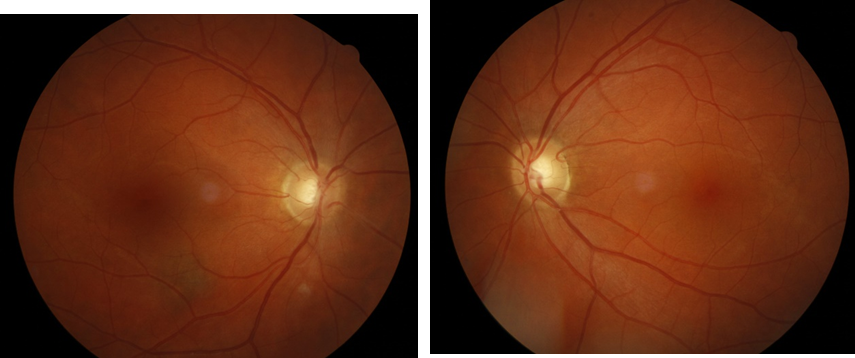
    image.png


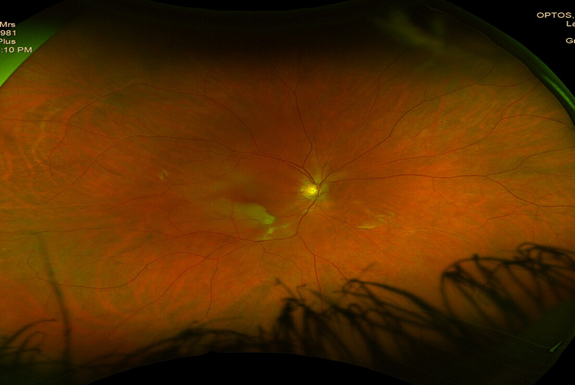
    Jul2025 – lost top half of vision superonasally od – completely black out superiorly and then headache started when the vision loss occurred. Optos – BRAO infero pale retina with periarterioloar sheathing.  No CWS/ No emboli OD normal OS.
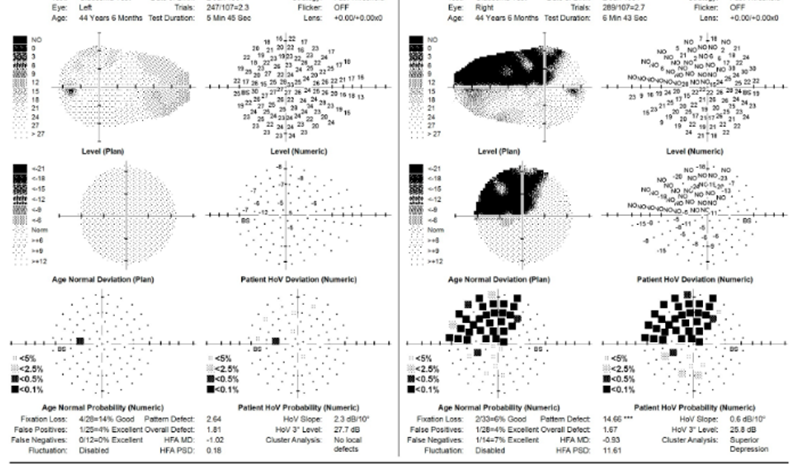
    image.png


    image.png


    A close up of a microscope  AI-generated content may be incorrect.

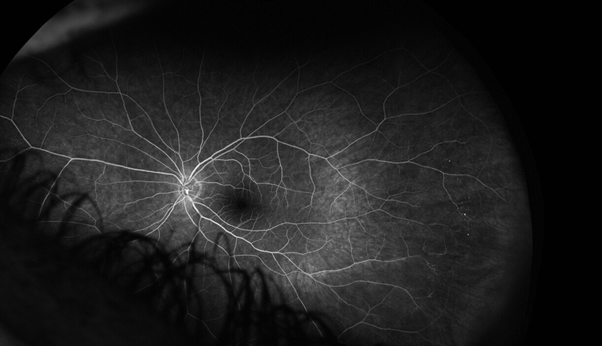
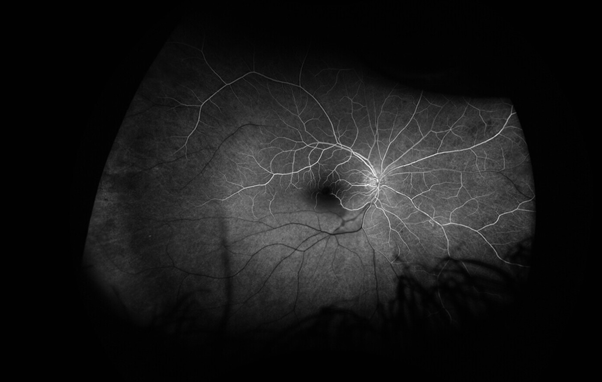
    Angio shows complete occlusion inferior temp branch retinal artery.  IN early shot can see that there is delayed filling of the superior temp artery (consistent with previous occlusion in Sep 2024).

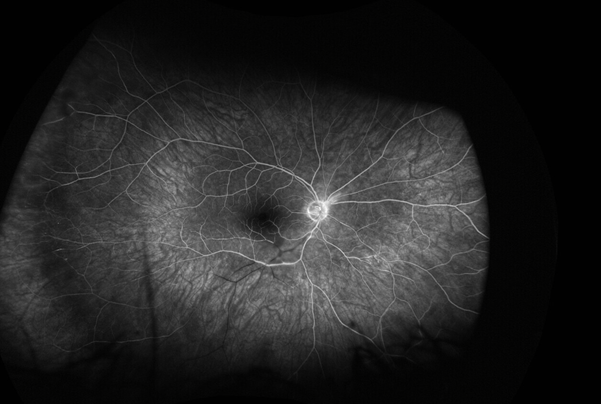
    Left eye only have late shots.

    Picture 1. RE – early (30s)

    Picture 2 .RE – late (>4 mins)

    Picture 3.  LE – late (> 4 mins)

    RE 23/7/25 retinal oedema along inferior hemi artery with sheathed inferior temp branch > inferior nasal
     

    A close-up of a human body  AI-generated content may be incorrect.A close-up of a vein  AI-generated content may be incorrect.

    A close-up of a light  AI-generated content may be incorrect.

     No history of hearing loss and no episodes of confusion.

    Exam: VA 6/6 sc ou CP 7/7 ou, visual fields as documented. No RAPD. Fundoscopy as above.

    Full eye movements, nil facial weakness, numbness. Normal tongue movements. Upper limb – nil upper limb drift, normal reflexes and sensation. LL: normal gait and tandem gait. Reflexes intact with downgoing plantars. Sensory examination normal.


    7Sep24 Antithrombin III 100% (80-120), protein C 108% (70-150), protein C free 85% Lupus anticoagulant negative, cardiolipin 3 (<10) HbA1c% 4.7% homocysteine 9.7 (4.4-13.6)

    Beta 2 glucoprotein 3 (<7)

    APC resistance normal. Prothrombin mutation negative.
    ANA <160, ANCA -ve, syphilis -ve, HIV -ve. Hepatitis B and C serology -ve, quantiferon -ve. SPEP normal, ACE 32. Lipids chol 4.6 LDL 2.2 HDL 2.0 CRP <5

    JAK2 negative, antiphospholipid ab -ve, carotid US normal. 

    Repeat. CT brain and MRI brain MRA normal. Mild chronic ischaemic change.

    ECG sinus. TTE with bubble study – negative for PFO. Heart bug 30 day holter

    OCT A – reduced perfusion superotemporally od and normal os. Holter normal ECHO normal. Heart bug – 30 day holter – normal

    Retinal colleague states unusual retinal infarcts seen on the FA -delayed filling od both superior and inferior retinal arteries – however they did completely fill. No evidence of vasculitis and no disc leakage.

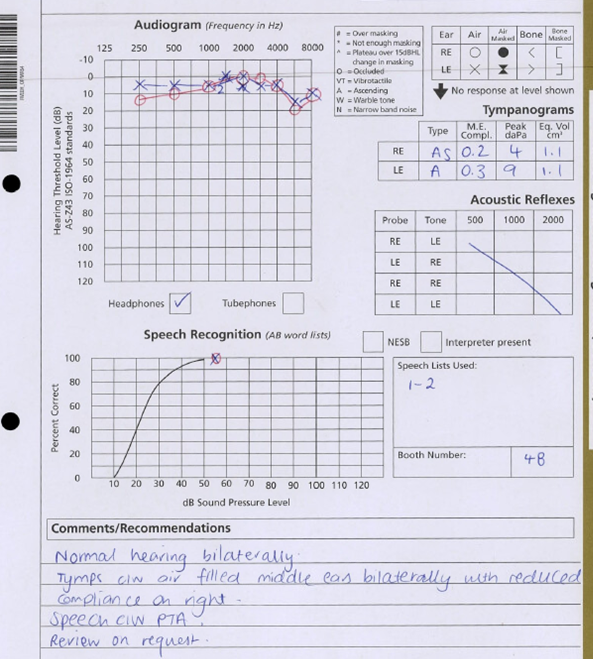
    Audiometry normal

    Awaiting TOE and ?loop recorder


    MRI – no T2 callosal lesions – chronic ischemic change
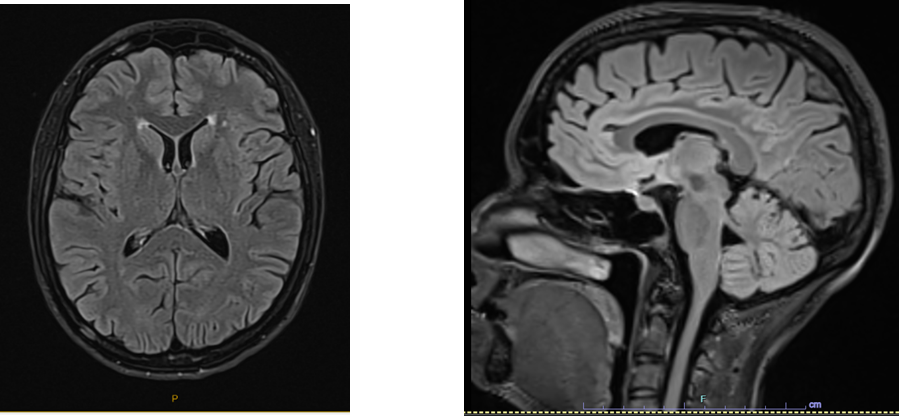
    image.png


    image.png


    Regards

    Dr Anthony Fok

    Neurologist/Neuro-ophthalmologist

    Royal Victorian Eye and Ear Hospital/ Monash Health/Melbourne Health


  • 2.  RE: 44yo with recurrent retinal infarctions x3

    Posted 08-03-2025 20:34

    looks like a pretty thorough work-up. Most patients with susacs will not have the full triad, and I have a handful of retinal arteritis patients that I have called "smoldering susacs" who present in a slowly progressive manner rather than rapid / sudden progression, some of which will have suggestive but not diagnostic MRI findings (irregularly thinned corpus callosum, single carpos callosal lesion). Whether they are true susacs or not is probably irrelevant, once you have ruled out embolic disease, hypercoaguability, and infectious disease, you are left with a retinal arteriolitis that requires immunosuppression to prevent progressive vision loss. If it is not rapidly progressive and no encephalitis, you can start with the milder / safer meds such as methotrexate, mycophenolate, azathioprine, or adalimumab rather than jumping to more aggressive treatments such as IVIG, PLEX, cyclophosphamide, rituximab. In you patient who has clear evidence of recurrent disease, I would be in favor of initiating treatment rather than waiting for additional manifestations to confirm susacs as there is high potential or permanent disability with future attacks.

    Best,

    Drew


    ------------------------------
    Andrew Carey
    Associate Professor
    Wilmer Eye Institute, Johns Hopkins Medicine
    Baltimore MD
    ------------------------------


  • 3.  RE: 44yo with recurrent retinal infarctions x3

    Posted 08-03-2025 22:59

    The other two, non-autoimmune conditions to think about would be fibromuscular dysplasia and reversible cerebral vasoconstriction syndrome, although would be rare to have isolated ocular findings.


    ------------------------------
    Andrew Carey
    Associate Professor
    Wilmer Eye Institute, Johns Hopkins Medicine
    Baltimore MD
    ------------------------------


  • 4.  RE: 44yo with recurrent retinal infarctions x3

    Posted 08-06-2025 22:59

    I second Drew on this. I take the same approach to "forme fruste" Susac's pts/isolated retinal arteriolitis.

    Best,

    Bart


    Bart K. Chwalisz, M.D.

    Neuro-ophthalmology, Headache Unit, and Skull Base Disorders Clinic. Division of  Neuroimmunology, Massachusetts General Hospital/Harvard Medical School

    https://www.massgeneral.org/neurology/treatments-and-services/inflammatory-neuroophthalmology-and-skull-base-disorders-clinic

    Neuro-ophthalmology, Massachusetts Eye & Ear Infirmary/Harvard Medical School

    Neurology, Martha's Vineyard Hospital


  • 5.  RE: 44yo with recurrent retinal infarctions x3

    Posted 08-04-2025 09:14
      |   view attached

    This is an older article that relates to your question. As is commented upon in this 1994 article, the etiologies are diverse. The etiologies often are not discovered, at least for many years, or longer – I had a case many years ago that > 20 years later was recognized to be a deficiency of protein C (after the patient had presented with a stroke).


    Susac syndrome is surely always a possibility and one that would not have been well-recognized in 1994.


    Joseph Rizzo, MD

    Simmons Lessell Professor of Ophthalmology

    Director, Neuro-Ophthalmology Service

    Mass Eye and Ear / Harvard Medical School


    The information in this e-mail is intended only for the person to whom it is addressed.  If you believe this e-mail was sent to you in error and the e-mail contains patient information, please contact the Mass General Brigham Compliance HelpLine at https://www.massgeneralbrigham.org/complianceline .


    Please note that this e-mail is not secure (encrypted).  If you do not wish to continue communication over unencrypted e-mail, please notify the sender of this message immediately.  Continuing to send or respond to e-mail after receiving this message means you understand and accept this risk and wish to continue to communicate over unencrypted e-mail.